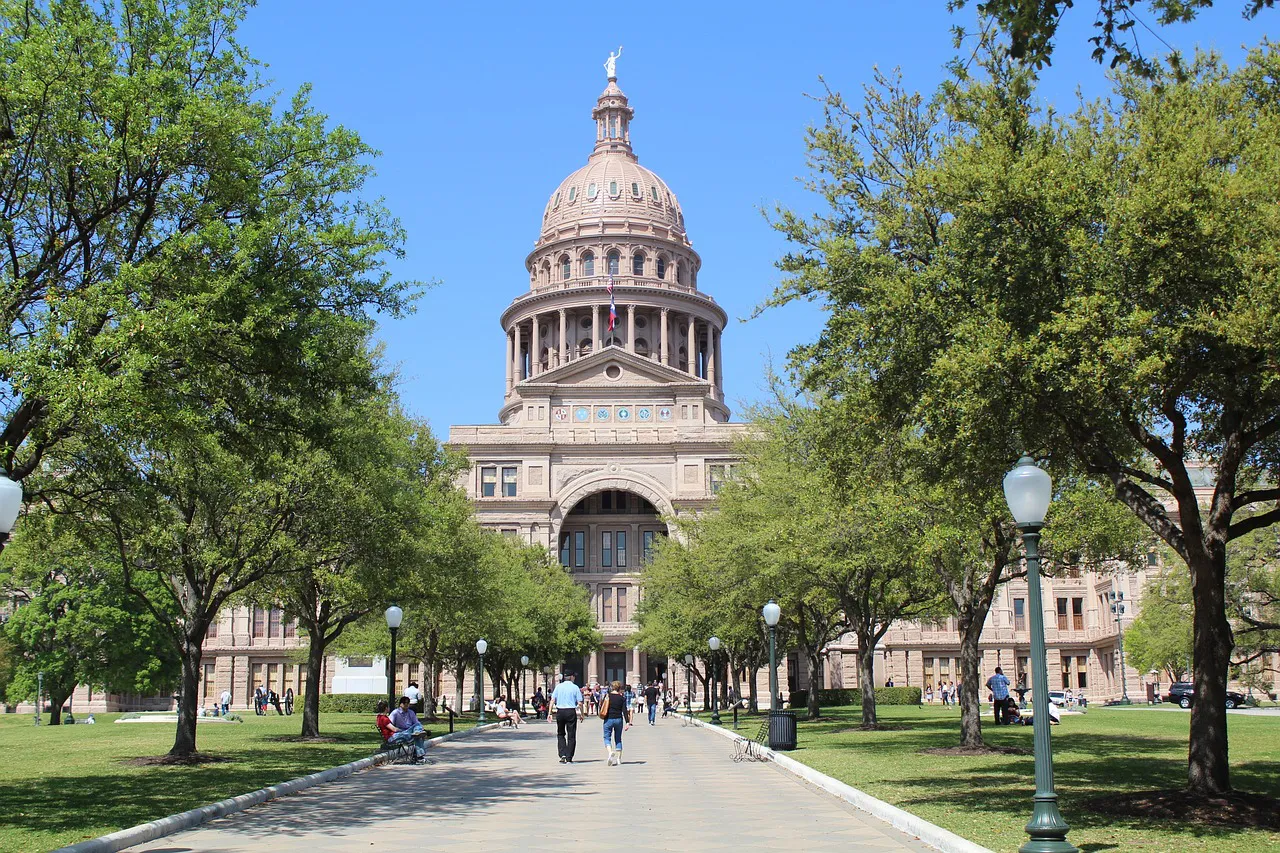

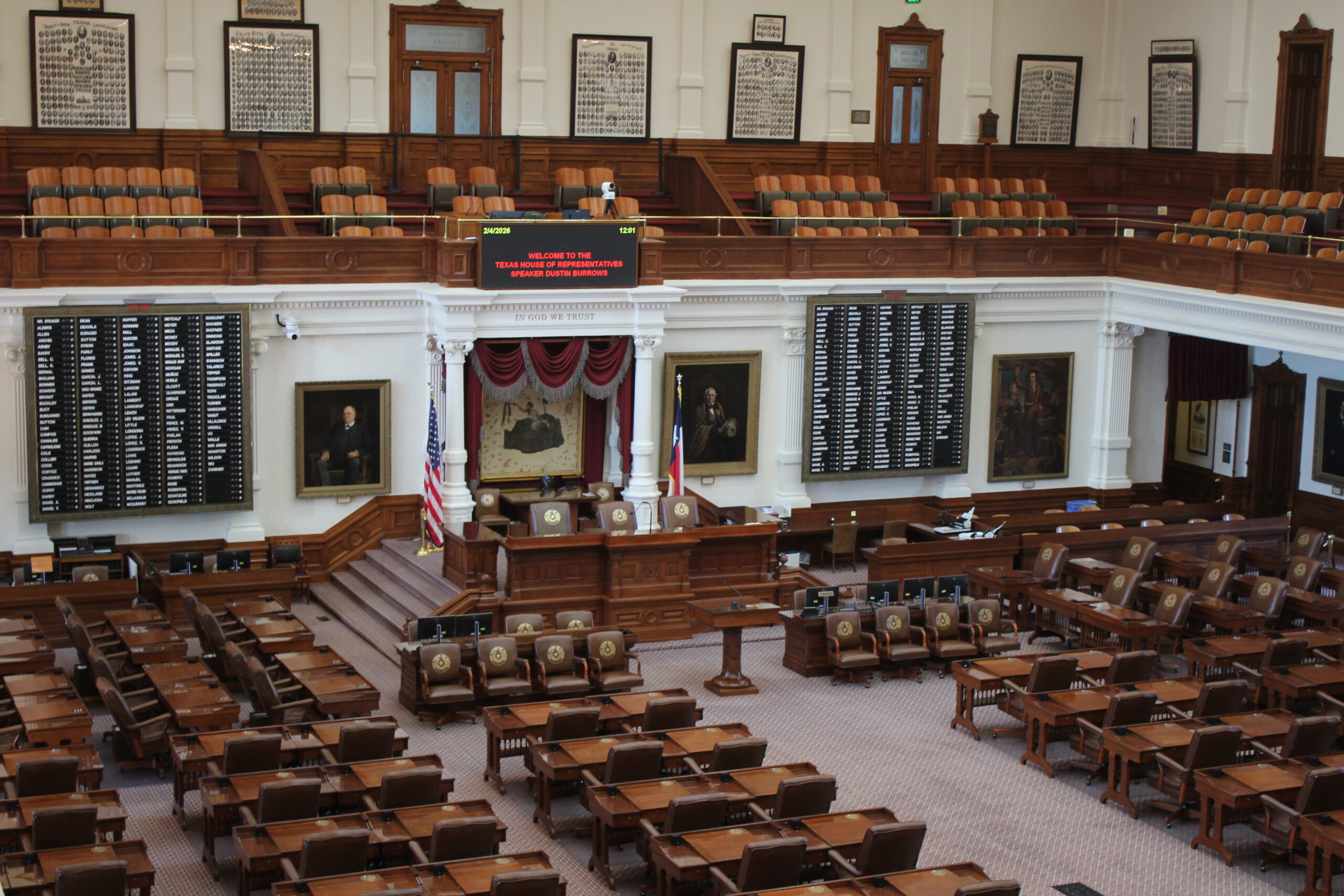
House Speaker Dustin Burrows has released interim charges for Texas House Committees to consider during the 89th Interim, including charges for 3 select committees created today. Details on the new committee membership can be found in this HillCo article and charges for all committees can be found here (PDF) and copied below:
AGRICULTURE AND LIVESTOCK
- Monitoring: Monitor the implementation and associated rulemaking of all legislation passed by the Committee and enacted by the 89th Legislature to ensure that legislative purposes are properly implemented, including the following:
- HB 43, relating to the Texas Agricultural Finance Authority and certain programs administered by the authority.
- Invasive Species: Study the detection and management of invasive species and insects impacting Texas agriculture, including New World screwworm, rice delphacids, cotton jassids, cattle fever ticks, and feral hogs. Examine current prevention, response, and eradication efforts.
- Texas Department of Agriculture: Study the statutory powers and responsibilities of the Texas Department of Agriculture to determine whether existing authority is adequate to promote and protect Texas agriculture.
- Resiliency of Texas Agriculture: Consider the legacy, economic impact, and domestic security benefits of Texas agriculture production. Examine opportunities to ensure the future competitiveness of Texas agriculture, given challenges such as global market distortions, rising input costs, labor constraints, water scarcity, and regulatory compliance burdens. Make recommendations to expand access to capital and reduce governmental barriers to enhance the growth and resilience of Texas agriculture.
- Market Development and Expansion of Texas-Grown Products: Examine the state’s role in promoting Texas-grown products, including Texas-produced seafood and viticulture. Assess state programs and policies that support local industries, including research, marketing, and grant programs. Study existing public and private programs that raise consumer awareness of and expand the markets for Texas products, such as the Texas Department of Agriculture’s “GO TEXAN” Partner Program, the Texas Shrimp Marketing Assistance Program, and the Texas Beef Checkoff. Make recommendations to enhance the global recognition and sales of Texas-produced products.
- Agency Oversight: Pursuant to the broad oversight responsibilities granted to the Committee under Section 301.014, Government Code, and the House Rules of Procedure, monitor the agencies under the Committee’s jurisdiction, including for fraud, waste, and abuse, where applicable. The jurisdiction of the Agriculture and Livestock Committee includes the following agencies:
- The Department of Agriculture;
- The Texas Animal Health Commission;
- The State Soil and Water Conservation Board;
- The Texas A&M Forest Service;
- The Texas administrator for the South Central Interstate Forest Fire Protection
- Compact;
- The Texas Apiary Inspection Service;
- Texas A&M AgriLife Research;
- The Texas A&M AgriLife Extension Service;
- The State Seed and Plant Board;
- The State Board of Veterinary Medical Examiners;
- The Texas A&M Veterinary Medical Diagnostic Laboratory;
- The Produce Recovery Fund Board;
- The board of directors of the Texas Boll Weevil Eradication Foundation, Inc.; and
- The Texas Wildlife Services.
APPROPRIATIONS
- Monitoring: Monitor and oversee the implementation of appropriations bills, other legislation passed by the 89th Legislature affecting the allocation or use of funds from the state treasury, and major spending items, including funding for the following:
- Maintaining existing property tax relief and significantly increasing the homestead and business personal property tax exemptions;
- Addressing cybersecurity threats and establishing the Texas Cyber Command;
- Establishing the Texas Advanced Nuclear Energy Office;
- Providing grants to support rural law enforcement and prosecutors;
- Increasing personal attendant wages;
- Supporting and expanding rural health care;
- Funding to implement the Dementia Prevention and Research Institute of Texas;
- Capital funding for Texas State Technical Colleges;
- Hiring additional state troopers and improving driver license office customer service at the Texas Department of Public Safety;
- Addressing water infrastructure, supply issues, and flood mitigation projects;
- Improving local rail grade crossing separation projects; and
- Additional grants and loans through the Texas Energy Fund.
- Infrastructure, Technology, and Workforce for Economic Development: Evaluate existing investment of state funds, as well as new opportunities, in programs that improve state infrastructure, promote critical areas of technology, and foster workforce and economic development, including: improvements to Texas ports, flood management, domestic semiconductor production, space commercialization, the moving image industry, and opportunities for public higher education institutions to forge federal partnerships on critical initiatives.
CORRECTIONS
- Monitoring: Monitor the implementation and associated rulemaking of all legislation passed by the Committee and enacted by the 89th Legislature to ensure that legislative purposes are properly implemented, including the following:
- SB 1080, relating to the revocation of an occupational license from certain license holders and the issuance of an occupational license to certain applicants with criminal convictions; and
- SB 2405, relating to the continuation and functions of the Texas Board of Criminal Justice and the Texas Department of Criminal Justice and to the functions of the Board of Pardons and Paroles, the Correctional Managed Health Care Committee, the Texas Correctional Office on Offenders with Medical or Mental Impairments, and the Windham School District.
- Investigating and Prosecuting Criminal Offenses Within TDCJ Facilities: Study the investigation and prosecution of criminal offenses committed within Texas Department of Criminal Justice (TDCJ) facilities, including assault, organized criminal activity, contraband-related violations, and other offenses. Examine the roles, authority, and coordination among the TDCJ Office of Inspector General, the Special Prosecution Unit, and local prosecutors in investigating, charging, and prosecuting these offenses. Review trends in facility-based criminal activity and identify barriers that hinder effective investigation and prosecution.
- Evaluating Texas Correctional Industries Workforce and Procurement Programs: Examine the role of Texas Correctional Industries (TCI) in providing vocational training and workforce skills that support successful reentry. Review statutory requirements for public entities to purchase TCI goods and services, including waiver processes, and identify barriers affecting workforce training, program effectiveness, and procurement practices. Make recommendations to improve workforce development, accountability, and efficient use of state resources.
- Agency Oversight: Pursuant to the broad oversight responsibilities granted to the Committee under Section 301.014, Government Code, and the House Rules of Procedure, monitor the agencies under the Committee’s jurisdiction, including for fraud, waste, and abuse, where applicable. The jurisdiction of the Corrections Committee includes the following agencies:
- The Texas Department of Criminal Justice;
- The Special Prosecution Unit;
- The Board of Pardons and Paroles;
- The Texas Civil Commitment Office; and
- The Texas Correctional Office on Offenders with Medical or Mental Impairments.
CRIMINAL JURISPRUDENCE
- Monitoring: Monitor the implementation and associated rulemaking of all legislation passed by the Committee and enacted by the 89th Legislature to ensure that legislative purposes are properly implemented.
- Violent Crime Clearance Rates and Investigative Capacity: Examine violent crime clearance rates in Texas and identify barriers to the effective prosecution of violent offenses, including investigative resources, forensic capacity, interagency coordination, and crime reporting practices. Evaluate whether disparate prosecutorial policies are impacting the prosecution of serious offenses, and assess how the enforcement of bond conditions, including the pursuit of violations or revocations following new criminal conduct, affects recidivism and public safety. Make recommendations to improve case clearance, strengthen coordination between law enforcement and prosecutors, and ensure consistent enforcement of criminal laws.
- Fraud and Financial Exploitation of Elderly and Vulnerable Texans: Examine trends related to the crimes of fraud, financial exploitation, and abuse targeting elderly and vulnerable Texans, including crimes involving telecommunications and emerging technologies. Review the effectiveness of current criminal statutes, penalties, restitution tools, and coordination among law enforcement and regulatory agencies. Identify gaps in detection, investigation, prosecution, and victim recovery, and provide recommendations to strengthen prevention and accountability.
- Juvenile Justice: Evaluate the effectiveness of indeterminate and determinate sentencing in promoting accountability, rehabilitation, and public safety, including whether current commitment and probation practices for serious offenses provide sufficient supervision. Recommend any statutory or policy changes to improve coordination, strengthen accountability, identify barriers in information sharing, and enhance public safety.
- Rural Criminal Justice Workforce Development: Study the feasibility of developing partnerships with Texas-based law schools to strengthen the pipeline of criminal prosecutors and defense attorneys serving rural and underserved areas of the state. Evaluate potential training pathways, clinical opportunities, or incentive-based partnerships with law schools that could support rural and underserved communities in maintaining a strong and reliable criminal justice workforce.
- Agency Oversight: Pursuant to the broad oversight responsibilities granted to the Committee under Section 301.014, Government Code, and the House Rules of Procedure, monitor the agencies under the Committee’s jurisdiction, including for fraud, waste, and abuse, where applicable. The jurisdiction of the Criminal Jurisprudence Committee includes the following agencies:
- The Office of State Prosecuting Attorney;
- The Texas State Council for Interstate Adult Offender Supervision;
- The Texas Juvenile Justice Board;
- The Texas Juvenile Justice Department;
- The Office of Independent Ombudsman for the Texas Juvenile Justice Department; and
- The Advisory Council on Juvenile Services.
CULTURE, RECREATION, AND TOURISM
- Monitoring: Monitor the implementation and associated rulemaking of all legislation passed by the Committee and enacted by the 89th Legislature to ensure that legislative purposes are properly implemented, including the following:
- HB 1397, relating to the care, custody, and display of the letter known as the victory or death letter, the Texas Constitution, and the Texas Declaration of Independence; and
- SB 3059, relating to the preservation, maintenance, restoration, and protection of the Alamo complex and surrounding area by the Alamo Commission.
- Texas Parks and Wildlife Department Funding: Evaluate the long-term sustainability of Texas Parks and Wildlife Department Fund 9. Examine alternative or supplemental funding mechanisms to ensure stable funding for wildlife conservation, state parks, and agency operations.
- New World Screwworm Action Plan: Evaluate the preparedness of the Texas Parks and Wildlife Department to respond to the threat of New World screwworm to Texas’ wildlife populations. Examine staffing levels, funding, interagency coordination, and response protocols to ensure the state is adequately prepared for response and mitigation of outbreaks.
- Cultivated Oyster Mariculture: Evaluate the status of Texas’ oyster mariculture industry, including various challenges such as barriers to obtaining insurance, access to capital, the lack of in-state hatcheries, additional research needs, and market access. Consider the public benefits of sustainable oyster farming and long-term industry stability on water quality and coastal ecosystems. Make recommendations to support the expansion and advancement of oyster mariculture in Texas.
- Voluntary Commercial Oyster License Buyback: Study the current health of Texas’ wild oyster reefs along with the impact of Texas Parks and Wildlife Department’s (TPWD) voluntary Commercial Oyster Boat License Buyback Program. Review TPWD’s conservation strategy plans and determine whether additional state support is necessary to improve oyster habitat and achieve conservation goals.
- Livestock Shows, County Fairs, and Rodeos: Examine the economic, cultural, and educational contributions of local livestock shows, county fairs, and rodeos across Texas. Consider the role these events play in preserving the state’s agricultural heritage, supporting youth development programs, and promoting tourism and economic activity in rural and urban communities. Evaluate policy recommendations to promote these longstanding community institutions and enhance resilience in youth livestock exhibition programs and events.
- Agency Oversight: Pursuant to the broad oversight responsibilities granted to the Committee under Section 301.014, Government Code, and the House Rules of Procedure, monitor the agencies under the Committee’s jurisdiction, including for fraud, waste, and abuse, where applicable. The jurisdiction of the Culture, Recreation, and Tourism Committee includes the following agencies:
- The Texas Economic Development and Tourism Office as it relates to the subject matter jurisdiction of the Committee;
- The Gulf States Marine Fisheries Compact;
- The Committee on the Formation of a Texas Bicentennial Commission;
- The Texas Parks and Wildlife Department;
- The Texas Commission on the Arts;
- The State Cemetery Committee;
- The Texas State Library and Archives Commission;
- The Texas Historical Commission;
- The State Preservation Board; and
- An office of state government to the extent the office promotes the Texas music industry.
DELIVERY OF GOVERNMENT EFFICIENCY
- Monitoring: Monitor the implementation and associated rulemaking of all legislation passed by the Committee and enacted by the 89th Legislature to ensure that legislative purposes are properly implemented, including the following:
- HB 150, relating to the establishment of the Texas Cyber Command and the transfer to it of certain powers and duties of the Department of Information Resources;
- HB 3963, relating to an early childhood integrated data system; and
- SB 14, relating to reforming the procedure by which state agencies adopt rules and impose regulatory requirements and the deference given to the interpretation of laws and rules by state agencies in certain judicial proceedings.
- Preventing Fraud, Waste, and Abuse: Study methods by which the state can leverage technology, including artificial intelligence, to detect fraud, waste, and abuse of taxpayer resources.
- Data Privacy and Security: Study the implementation and effectiveness of the Texas Data Privacy and Security Act to determine whether the law provides adequate protection for Texas residents and businesses.
- Agency Oversight: Pursuant to the broad oversight responsibilities granted to the Committee under Section 301.014, Government Code, and the House Rules of Procedure, monitor the agencies under the Committee’s jurisdiction, including for fraud, waste, and abuse, where applicable. The jurisdiction of the Delivery of Government Efficiency Committee includes the following agencies:
- The Department of Information Resources;
- The Sunset Advisory Commission; and
- The Texas Space Commission.
ELECTIONS
- Monitoring: Monitor the implementation and associated rulemaking of all legislation passed by the Committee and enacted by the 89th Legislature to ensure that legislative purposes are properly implemented, including the following:
- SB 827, relating to the audit of an election using an electronic voting system.
- Citizenship and Voting: Study the integrity of the voting procedures in Texas, including voter registration and voter-roll maintenance, and make recommendations to ensure that only U.S. citizens are able to register and vote in Texas.
- Voter Registration: Study the state’s voter registration processes and systems by conducting an inventory of the systems used by counties that are offline and analyzing the impact of supporting multiple software systems across the state. Recommend ways to streamline voter-roll maintenance and improve efficiency.
- Election Timelines: Examine statutory timelines related to the administration of elections, including key deadlines. Evaluate the need to make adjustments to improve election administration, transparency, and voter access.
- Technology in Elections: Study the growing role of new and rapidly evolving technologies in the election process and political communications.
- Integration of Early and Election Day Voting: Monitor the implementation of SB 2753, relating to the integration of early voting by personal appearance and election day voting, including the manner in which election returns are processed and other related changes. Monitor the working group led by the Texas Secretary of State (SOS) in conjunction with counties. Monitor the statutorily required SOS report and its recommendations for proper implementation. Identify any administrative, funding, or operational issues that may warrant legislative consideration.
- Election Administration Staffing Needs: Study the challenges faced by election officials in finding volunteers and staff for early-voting and election days. Identify methods or programs to increase the number of election workers necessary to administer elections.
- Election Transparency and Ballot Privacy: Survey the entities and types of election-related information subject to the Texas Public Information Act. Additionally, review ballot privacy and security requirements. Make recommendations to increase transparency, protect the public’s right to review and inspect election records, and ensure ballot secrecy remains intact.
- Agency Oversight: Pursuant to the broad oversight responsibilities granted to the Committee under Section 301.014, Government Code, and the House Rules of Procedure, monitor the agencies under the Committee’s jurisdiction, including for fraud, waste, and abuse, where applicable. The jurisdiction of the Elections Committee includes the following agencies:
- The Office of the Secretary of State.
ENERGY RESOURCES
- Monitoring: Monitor the implementation and associated rulemaking of all legislation passed by the Committee and enacted by the 89th Legislature to ensure that legislative purposes are properly implemented, including the following:
- HB 48, relating to the creation of an organized oilfield theft prevention unit within the Texas Department of Public Safety; and
- HB 2663, relating to the affirmation required to be made by an operator as part of an application to the Railroad Commission of Texas for an extension of the deadline for plugging an inactive well.
- Produced Water: Review the utilization of produced water in Texas. Examine efforts to develop mechanisms for beneficial reuse, barriers to deployment, and other financial impediments limiting the use of produced water. Evaluate the effectiveness of recently passed legislation to address liability concerns and streamline permitting. Make recommendations to encourage greater utilization of this resource.
- Hydrogen: Survey the state of the hydrogen industry in Texas. Review the Railroad Commission of Texas’ Hydrogen Production Policy Council recommendations and determine whether statutory changes are necessary to improve the production, transmission, and utilization of hydrogen.
- Carbon Capture, Utilization, and Storage: Evaluate the continued viability of commercial carbon capture, utilization, and storage in Texas. Analyze the effect of carbon capture projects on energy development and security. Evaluate relevant case law and statutes related to the ownership of pore space, operator liability, and environmental protections. Review how the recent attainment of Class VI primacy may impact the future development of carbon capture projects.
- Severed Well Operations: Review the procedures and administrative rules related to severed wells and the process for an operator to resume operations after a well has been severed. Make recommendations to address any relevant safety and regulatory compliance concerns regarding severed well operations.
- Seismic Activity and Injection Wells: Study the Railroad Commission of Texas’ regulation of disposal and injection wells and determine whether additional measures are needed to protect public safety and critical infrastructure. Review the efficacy of current statutes, rules, and industry practices intended to mitigate seismic activity related to injection and disposal wells.
- P-13 Water Wells Overview: Study the impact of environmental hazards caused by P-13 water wells. Determine the appropriate state agency best positioned to have primary regulatory authority over environmental hazards caused by discharges from P-13 water wells associated with oil and gas and mineral production. Review current and projected costs associated with managing these hazards and identify potential funding mechanisms necessary to plug such wells.
- Preventing Orphaned Wells: Monitor the implementation of SB 1150 and review the administrative processes and safeguards in place to ensure inactive wells are adequately and timely plugged. Identify strategies and policy recommendations to reduce the number of inactive wells that become orphaned.
- Global Energy Overview: Assess the impact of increased geopolitical uncertainty on Texas’ oil and gas industry. Consider the effects of regime changes in the Middle East, the importation of Venezuelan oil, tanker traffic risks in the Strait of Hormuz, and disruptions to the international liquefied natural gas market.
- Agency Oversight: Pursuant to the broad oversight responsibilities granted to the Committee under Section 301.014, Government Code, and the House Rules of Procedure, monitor the agencies under the Committee’s jurisdiction, including for fraud, waste, and abuse, where applicable. The jurisdiction of the Energy Resources Committee includes the following agencies:
- The Railroad Commission of Texas;
- The Texas representative for the Interstate Oil and Gas Compact Commission;
- The Office of Interstate Mining Compact Commissioner for Texas;
- The State Energy Conservation Office; and
- The Office of Southern States Energy Board Member for Texas
ENVIRONMENTAL REGULATION
- Monitoring: Monitor the implementation and associated rulemaking of all legislation passed by the Committee and enacted by the 89th Legislature to ensure that legislative purposes are properly implemented, including the following:
- HB 3866, relating to the installation and operation of intermediate bulk container recycling facilities;
- HB 4413, relating to mass balance attribution of renewable biomass feedstocks used to produce renewable chemicals;
- SB 763, relating to standard permits for certain concrete plants; and
- SB 2037, relating to permit application review and contested case procedures for environmental permits involving a project to construct or modify a liquefied natural gas export terminal.
- Improving the Regulatory Process: Study environmental regulations governing air, land, and water quality, waste disposal, and industrial development. Examine opportunities to streamline permitting processes, reduce unnecessary or duplicative regulatory requirements, and improve coordination among responsible agencies. Evaluate how current regulatory requirements affect economic development, infrastructure investment, and business operations across the state while ensuring environmental safeguards remain effective. Develop recommendations to improve regulatory processes, interagency coordination, and provide greater predictability for regulated entities.
- Agency Oversight: Pursuant to the broad oversight responsibilities granted to the Committee under Section 301.014, Government Code, and the House Rules of Procedure, monitor the agencies under the Committee’s jurisdiction, including for fraud, waste, and abuse, where applicable. The jurisdiction of the Environmental Regulation Committee includes the following agencies:
- Environmental matters that are regulated by the Department of State Health Services or the Texas Commission on Environmental Quality;
- Oversight of the Texas Commission on Environmental Quality as it relates to environmental regulation; and
- The Texas Low-Level Radioactive Waste Disposal Compact Commission
HIGHER EDUCATION
- Monitoring: Monitor the implementation and associated rulemaking of all legislation passed by the Committee and enacted by the 89th Legislature to ensure that legislative purposes are properly implemented, including the following:
- SB 1786, relating to public higher education;
- SB 2231, relating to requiring the Texas Higher Education Coordinating Board to waive fees for admission applications submitted to public institutions of higher education during certain periods; and
- SB 2314, relating to the creation of an electronic platform and submission portal, known as My Texas Future, to facilitate public high school students’ awareness of and application to institutions of higher education using the electronic common admission application form.
- State of Higher Education: Study the current state of higher education in Texas. Examine enrollment trends, workforce demands, and postsecondary outcomes, as well as progress toward the state’s Building a Talent Strong Texas strategic plan. Examine indicators of institutional competitiveness, including completion rates, faculty recruitment and retention, and research classification trends in comparison to other states.
- Postsecondary Education Affordability: Study strategies to improve postsecondary education affordability for Texas students and reduce financial barriers to enrollment, persistence, and completion. Evaluate whether state financial aid investments are effectively targeted and structured to promote student success and meet workforce needs. Review the impact of recent federal legislation on student aid and institutional affordability. Analyze unmet financial need among eligible students and make recommendations to ensure state investments deliver measurable returns for students, employers, and taxpayers.
- Foreign Adversary Protections in Higher Education: Examine the implementation of recent legislation that protects Texas institutions of higher education from foreign adversarial influence and research security risks. Assess institutional compliance with statutory requirements, including reporting, screening, and oversight processes, and evaluate the role and effectiveness of the Higher Education Research Security Council. Identify and make recommendations regarding the scope of covered foreign entities, designation of sensitive research areas, and institutional risk determination processes.
- Increasing Credential Completion: Evaluate methods to increase credential completion aligned with regional labor demands and national defense strategy in Texas public higher education institutions. Study accelerated postsecondary pathways such as credit for prior learning, prior learning assessments, reverse transfer, and competency-based education. Explore the impact of federal Workforce Pell Grants on short-term credentials. Identify areas to provide better transfer supports, increase re-enrollment, and reduce time to credential completion.
- Research Competitiveness: Examine the ability of Texas public higher education institutions to compete for and secure federal grant funding. Review the impact of recent changes in federal policy and assess whether current state policies adequately support competitiveness. Evaluate opportunities to strengthen coordination, prioritize research related investments based on statewide impact and workforce needs, and enhance institutional capacity to meet federal requirements.
- Aligning Advising Initiatives: Examine investments by the state in advising systems and tools that support high school and college course planning, credential attainment, and successful transitions to postsecondary education and the workforce. Evaluate partnership based models that leverage postsecondary and labor market research and available data aligned to high-wage and high-demand careers and expand advising capacity. Assess opportunities for the Tri-Agency to better align resources and services to strengthen advising systems and improve student outcomes.
- Agency Oversight: Pursuant to the broad oversight responsibilities granted to the Committee under Section 301.014, Government Code, and the House Rules of Procedure, monitor the agencies under the Committee’s jurisdiction, including for fraud, waste, and abuse, where applicable. The jurisdiction of the Higher Education Committee includes the following agencies:
- Colleges and universities of the State of Texas;
- The Texas A&M Engineering Experiment Station;
- The Texas A&M Engineering Extension Service;
- The Texas Higher Education Coordinating Board;
- The Texas Guaranteed Student Loan Corporation;
- The Prepaid Higher Education Tuition Board; and
- The Texas A&M Transportation Institute.
HOMELAND SECURITY, PUBLIC SAFETY, AND VETERANS’ AFFAIRS
- Monitoring: Monitor the implementation and associated rulemaking of all legislation passed by the Committee and enacted by the 89th Legislature to ensure that legislative purposes are properly implemented, including the following:
- HB 33, relating to active shooter incidents at primary and secondary school facilities and other emergencies;
- SB 1620, relating to the establishment of the Texas forensic analyst apprenticeship pilot program; and
- SB 2312, relating to the establishment and powers and duties of the Texas Advisory Committee on Geopolitical Conflict.
- Countering Foreign Financial Influence and Illicit Networks: Study national security and public safety risks associated with foreign-controlled or foreign-influenced financial service entities operating in Texas, including money transmitters. Evaluate whether existing state oversight mechanisms sufficiently detect and mitigate risks related to foreign adversaries, transnational criminal organizations, and illicit financial activity that may threaten Texas residents or critical financial infrastructure.
- Foreign Adversary Influence and Transparency Enforcement: Study foreign adversary and terrorist-linked influence operations affecting Texas, including political activity, advocacy, and funding networks directed by foreign governments or organizations. Examine gaps in federal registration and disclosure requirements and consider whether Texas should establish state-level requirements to identify, expose, and deter individuals or organizations operating on behalf of foreign adversaries or terrorist-linked entities, including registration mandates, funding restrictions, and enforceable penalties for noncompliance.
- Protecting Texas Critical Infrastructure From Foreign Adversaries: Study the risks posed by remote-access technologies embedded in critical infrastructure that could enable cyber intrusion, surveillance, or disruption by foreign adversaries or other malicious actors. Evaluate whether additional safeguards are needed to strengthen oversight, prevent exploitation, and protect Texas infrastructure from security threats. Provide recommendations to enhance accountability and ensure the resilience of critical systems.
- Authority of the Texas Commission on Law Enforcement: Evaluate the statutory framework governing the creation and recognition of law enforcement agencies in Texas and the role of the Texas Commission on Law Enforcement in that process. Review whether current law provides clear authority and standards for establishing new agencies employing licensed peace officers and identify any statutory gaps or inconsistencies. Provide recommendations, if needed, to clarify authority and ensure consistent standards for the establishment of law enforcement agencies.
- Strengthening the Law Enforcement Workforce: Study workforce challenges affecting state and local law enforcement agencies, including recruitment, retention, moral injury, and training-pipeline barriers. Examine the operational impacts of staffing shortages and evaluate strategies to strengthen the law enforcement workforce, including financial support for recruits during academy training, childcare and family-support solutions for officers, and other incentives to improve recruitment, retention, and public safety readiness.
- Agency Oversight: Pursuant to the broad oversight responsibilities granted to the Committee under Section 301.014, Government Code, and the House Rules of Procedure, monitor the agencies under the Committee’s jurisdiction, including for fraud, waste, and abuse, where applicable. The jurisdiction of the Homeland Security, Public Safety, and Veterans’ Affairs Committee includes the following agencies:
- The Texas Commission on Law Enforcement;
- The Department of Public Safety;
- The Texas Division of Emergency Management;
- The Emergency Management Council;
- The Texas Forensic Science Commission;
- The Texas Military Preparedness Commission;
- The Commission on State Emergency Communications;
- The Texas Military Department;
- The Texas Veterans Commission;
- The Veterans’ Land Board; and
- The Texas Crime Stoppers Council.
Subcommittee on Defense and Veterans’ Affairs
- Veteran Mental Health Programs: Monitor the implementation of HB 114, relating to the transfer of functions relating to certain veteran mental health programs and plans to the Texas Veterans Commission. Conduct active oversight to ensure the efficient and effective transfer of authority, funding, personnel, and administrative responsibilities.
- Legal Representation for Texas Veterans: Study access to legal representation for Texas veterans pursuing disability benefits claims and appeals in the federal veterans’ benefits system. Review the availability of assistance provided through the Texas Veterans Commission, nonprofit organizations, law school clinics, and pro bono attorneys. Identify barriers to representation in appeals before the U.S. Court of Appeals for Veterans Claims and recommend strategies to improve coordination and access to legal assistance for Texas veterans.
HUMAN SERVICES
- Monitoring: Monitor the implementation and associated rulemaking of all legislation passed by the Committee and enacted by the 89th Legislature to ensure that legislative purposes are properly implemented, including the following:
- HB 26, relating to authorizing Medicaid managed care organizations to offer nutrition support services in lieu of other state Medicaid plan services;
- HB 109, relating to the construction, expansion, and operation of certain inpatient mental health facilities and the designation of residential treatment facilities for certain juveniles;
- HB 136, relating to Medicaid coverage and reimbursement for lactation consultation services;
- SB 379, relating to prohibiting the purchase of sweetened drinks and candy under the supplemental nutrition assistance program; and
- SB 513, relating to a rural community-based care pilot program.
- Provision of Services for Texans With Intellectual and Developmental Disabilities: Evaluate the availability of services for Texans with intellectual and developmental disabilities, including service coordination, Home and Community-Based Services, and the functionality of the waiver interest list. Ensure vulnerable Texans are protected by the current regulatory landscape and make recommendations for improvements.
- Targeted and Meaningful Child Welfare Services for Families: Ensure that families involved with the Department of Family and Protective Services receive services that promote family stabilization and reunification, as appropriate. Study the availability of services across the state and make recommendations to improve service delivery and outcomes for families, including services to ensure the stability of kinship placements.
- Preventing Fraud, Waste, and Abuse: Ensure government services provided by agencies under the committee’s jurisdiction, including Medicaid and the Supplemental Nutrition Assistance Program, efficiently serve eligible Texans. Evaluate barriers to efficient service provision for both clients and the providers of services, particularly the enrollment and credentialing of Medicaid providers. Review current efforts to identify and prevent fraud, waste, and abuse, and consider additional measures to reduce costs to taxpayers.
- Ensuring Transparency in the Adoption Process and Providing Post-Adoptive Supports for Former Foster Youth: Evaluate legal requirements and policies for private adoptions to increase transparency and protect the rights of both adoptive families and biological parents. Review the provision and availability of services available to adoptive families of former foster youth to ensure successful adoptions and make recommendations to address unmet needs.
- Protecting Due Process and Civil Rights in Child Protective Services Investigations: Monitor the consistency of practices in child protective services investigations and make improvements related to determinations of abuse and neglect, notification of rights, and access to information and records regarding investigations and case progression. Evaluate the use of the Central Abuse Registry and develop proposals to improve due process reviews.
- Agency Oversight: Pursuant to the broad oversight responsibilities granted to the Committee under Section 301.014, Government Code, and the House Rules of Procedure, monitor the agencies under the Committee’s jurisdiction, including for fraud, waste, and abuse, where applicable. The jurisdiction of the Human Services Committee includes the following agencies:
- The Health and Human Services Commission and the Texas Behavioral Health Executive Council as it relates to the subject matter jurisdiction of the Committee;
- The Department of Family and Protective Services;
- The Texas State Board of Social Worker Examiners; and
- The Texas State Board of Examiners of Professional Counselors.
INSURANCE
- Monitoring: Monitor the implementation and associated rulemaking of all legislation passed by the Committee and enacted by the 89th Legislature to ensure that legislative purposes are properly implemented, including the following:
- HB 138, relating to the establishment of the Health Impact, Cost, and Coverage Analysis Program;
- HB 3689, relating to funding of excess losses and operating expenses of the Texas Windstorm Insurance Association; authorizing an assessment; and
- SB 458, relating to an appraisal process for disputed losses under personal automobile or residential property insurance policies.
- Health Benefits for Small and Midsize Employers: Study primary cost drivers affecting employer-sponsored health plans and evaluate the downstream impacts on employee access to coverage. Identify policy options that allow for flexibility, innovative benefit design, and encourage market competition. Make recommendations to improve the availability of affordable coverage options for employers.
- Cost Drivers Impacting Property and Casualty Insurance Premiums: Study cost drivers impacting property and casualty insurance premiums for consumers and their impact on home affordability in Texas. Study rate trends, underwriting practices, and market availability, with particular attention to coastal and catastrophe-exposed regions. Examine strategies used in other states, including those intended to reduce losses, improve property resilience and promote loss mitigation. Examine the need to employ additional strategies or make statutory changes to encourage greater market participation and promote competition. Make recommendations that reduce the cost of insurance and maintain sufficient consumer protection standards and market stability.
- Federal Policy Impacts: Evaluate both the direct and indirect impacts of federal health-related policy and programs on consumers and the state, including those related to health coverage access and affordability, health insurance product adaptation and innovation, network adequacy, and administrative costs and compliance. Determine whether state statutory or regulatory changes are needed.
- Consumer Protection: Evaluate consumer protections in property and casualty insurance lines, and review the effectiveness of existing laws and enforcement mechanisms to ensure transparency, consumer choice, and coverage adequacy. Identify any deficiencies and recommend statutory clarifications or additional safeguards to strengthen consumer protections.
- Declination, Cancellation, or Nonrenewal: Monitor the implementation of HB 2067, relating to declination, cancellation, or nonrenewal of insurance policies. Review agency rulemaking and enforcement, overall market impact, and policy implications for additional insureds. Identify whether any statutory or regulatory improvements are needed to ensure transparency, fairness, and a stable insurance marketplace.
- Prompt Payment: Review the prompt payment of insurance claims. Evaluate the effectiveness of applicable statutes and administrative rules and assess whether insurers are complying with these requirements. Identify the need for enhanced oversight or additional enforcement mechanisms to ensure the prompt payment of claims.
- Agency Oversight: Pursuant to the broad oversight responsibilities granted to the Committee under Section 301.014, Government Code, and the House Rules of Procedure, monitor the agencies under the Committee’s jurisdiction, including for fraud, waste, and abuse, where applicable. The jurisdiction of the Insurance Committee includes the following agencies:
- The Texas Department of Insurance;
- The Texas Health Benefits Purchasing Cooperative; and
- The Office of Public Insurance Counsel.
INTERGOVERNMENTAL AFFAIRS
- Monitoring: Monitor the implementation and associated rulemaking of all legislation passed by the Committee and enacted by the 89th Legislature to ensure that legislative purposes are properly implemented.
- Preventing Homelessness of Foster Youth: Study the U.S. Department of Housing and Urban Development’s Foster Youth to Independence Initiative, which aims to prevent homelessness among young adults aging out of the foster care system. Examine program models from other states and determine best practices for potential applicability in Texas.
- Mental Health Impacts, Homelessness, and System Recidivism: Study and evaluate the relationship between mental health conditions, homelessness, and the criminal justice system. Examine the availability of specialized high-acuity beds for the homeless, specifically for those with severe mental illness, addiction, and complex medical conditions. Make recommendations regarding pre-arrest diversion, alternatives to inpatient hospitalization, and best practices for sharing data to reduce recidivism.
- Agency Oversight: Pursuant to the broad oversight responsibilities granted to the Committee under Section 301.014, Government Code, and the House Rules of Procedure, monitor the agencies under the Committee’s jurisdiction, including for fraud, waste, and abuse, where applicable. The jurisdiction of the Intergovernmental Affairs Committee includes the following agencies:
- The Office of State-Federal Relations;
- The Commission on Jail Standards;
- The Texas Department of Housing and Community Affairs; and
- The Texas Commission on Fire Protection.
Subcommittee on County and Regional Government
- Strengthening County Law Enforcement: Study the ability of counties to recruit, train, and retain officers. Study the disparities between counties in provisions relating to the funding of, contracting with, and employment for law enforcement agencies, and evaluate solutions to strengthen county law enforcement.
- Medical Examiner Expansion: Examine the statutory framework governing county medical examiner offices in Texas, including the population threshold and authorization for intercounty medical examiner districts. Evaluate the number of counties that maintain medical examiner offices and those that rely on justices of the peace. Assess how this framework affects the consistency, timeliness, and professional quality of death investigations across counties and consider potential statutory reforms to strengthen statewide capacity.
Subcommittee on State-Federal Relations
- Discontinuation of Penny Production: Study the impact on local governments following the discontinuation of penny production. Consider the necessity of providing local governments with administrative guidance applicable to implementing this change.
- Federal Changes to Postmark Procedures: Study the impact of recent federal postmarking rule changes on access to public services and programs. Evaluate the need for public education and awareness regarding the recent federal postmarking rule change.
JUDICIARY AND CIVIL JURISPRUDENCE
- Monitoring: Monitor the implementation and associated rulemaking of all legislation passed by the Committee and enacted by the 89th Legislature to ensure that legislative purposes are properly implemented, including the following:
- HB 116, relating to the grounds for the involuntary termination of the parent-child relationship;
- HB 581, relating to the creation of artificial sexual material harmful to minors;
- HB 4623, relating to liability of public schools and professional school employees for sexual misconduct involving students;
- SB 38, relating to the eviction from real property of certain persons not entitled to enter, occupy, or remain in possession of the premises; and
- SB 835, relating to the enforceability of certain nondisclosure or confidentiality provisions with respect to an act of sexual abuse.
- Safeguarding Against the Influence of Foreign Law: In 2017, the Legislature passed HB 45, ensuring that Texas courts prioritize U.S. and state constitutional protections and public policy when considering foreign laws, judgments, and arbitration awards in specific family law matters. Review the implementation of this law to ensure that Sharia law or any other foreign law contrary to the U.S. and Texas constitutions has not permeated into other judicial and legal matters in Texas.
- State Office of Administrative Hearings Emergency Order Procedures: Study the State Office of Administrative Hearings’ use of emergency order procedures and deadlines. Evaluate how standardization of these procedures and deadlines may improve administrative efficiency.
- Gender Modification and Health Care Liability: Study limitations on a health care liability claim involving certain gender modification drugs provided to and procedures performed on a minor. Review the effectiveness of those provisions and make recommendations to update current law.
- Court-Ordered Mental Health Services: Review the process, criteria, duration, outcome, and necessity of court-ordered mental health services for families and children, including reunification therapies. Evaluate the availability and appointment of such providers. Analyze the effectiveness of these services and the financial burden they can impose. Determine if these mandated services and providers infringe on parental rights.
- Judicial Data Collection Reform: Review existing court data collection and reporting practices conducted by the Office of Court Administration and the Texas Judicial Council. Determine whether, and what classes of, additional data should be collected so that courts can provide sufficient transparency and consistency to support due process and efficient resolution of cases. Study how this additional data can provide policymakers and the State Judicial Conduct Commission with information to help ensure justice is provided consistently.
- Use of Artificial Intelligence in Legal Practice: Evaluate the use of artificial intelligence within the legal profession and judiciary. Study the risks and benefits associated with using artificial intelligence and how to mitigate actual or potential harms.
- Insurers’ Use of Staff Counsel: Study insurers’ use of staff attorneys to represent insureds. Consider the integrity of the attorney–client relationship when staff attorneys are assigned to defend the insured’s interests. Identify scenarios in which the insurer’s and insured’s interests may not be congruent and whether ethical concerns exist. Identify the correlation in increased percentage and size of settlements, if any, resulting from the 2008 Supreme Court of Texas decision of Unauthorized Practice of Law Committee v. American Home Assurance Co., Inc., 261 S.W.3d 24. Compare states that allow insurers’ staff attorneys to represent an insured’s interests with those in which the practice is prohibited, and determine whether this practice affects settlement amounts and costs paid by insureds.
- Agency Oversight: Pursuant to the broad oversight responsibilities granted to the Committee under Section 301.014, Government Code, and the House Rules of Procedure, monitor the agencies under the Committee’s jurisdiction, including for fraud, waste, and abuse, where applicable. The jurisdiction of the Judiciary and Civil Jurisprudence Committee includes the following agencies:
- The Supreme Court;
- The courts of appeals;
- The Court of Criminal Appeals;
- The State Commission on Judicial Conduct;
- The Office of Court Administration of the Texas Judicial System;
- The State Law Library;
- The Texas Judicial Council;
- The Judicial Branch Certification Commission;
- The Office of the Attorney General;
- The Board of Law Examiners;
- The State Bar of Texas; and
- The State Office of Administrative Hearings
Subcommittee on Family and Fiduciary Relationships
- Timeline for Divorce and Child Custody Proceedings: Examine current practices and procedures for spousal separation and child custody proceedings. Identify any inefficiencies of this process and determine how the implementation of standardized scheduling orders and timelines could impact outcomes.
LAND AND RESOURCE MANAGEMENT
- Monitoring: Monitor the implementation and associated rulemaking of all legislation passed by the Committee and enacted by the 89th Legislature to ensure that legislative purposes are properly implemented, including the following:
- HB 24, relating to procedures for changes to a zoning regulation or district boundary;
- SB 15, relating to size and density requirements for residential lots in certain municipalities;
- SB 840, relating to certain municipal regulation of certain mixed-use and multifamily residential development projects and conversion of certain commercial buildings to mixed-use and multifamily residential occupancy; and
- SB 1567, relating to the authority of home-rule municipalities to regulate the occupancy of dwelling units.
- Municipal Utility Districts: Consider the proliferation of municipal utility districts (MUDs) and evaluate their impact on housing attainability and affordability, as well as challenges associated with managing growth. Review the methods by which MUDs are created and identify best practices to ensure sufficient oversight exists.
- Housing Affordability: Examine how the following factors may improve housing attainability and affordability: • Fees: Examine the collection, use, and oversight of fees imposed by local governments, including impact fees, utility connection charges, permit and inspection fees, and drainage or stormwater fees. Evaluate whether sufficient financial transparency exists and if such fees are used in accordance with their legal authority. • Third-Party Review: Study methods to expedite the safe permitting of construction projects to increase housing supply. Review the ongoing implementation of recent legislation regarding the use of third-party reviews of plats and property development plans, permits, and similar documents, and the inspection of an improvement related to such a document. Examine methods that have proven successful in other states and recommend statutory changes to expedite the permitting of residential housing projects. • Pre-Approval of Residential Building Plans: Examine the impacts and feasibility of allowing municipalities to establish processes for the pre-approval and repeated use of residential building plans, including the potential effects on housing supply, affordability, permitting timelines, and local administrative capacity.
- Agency Oversight: Pursuant to the broad oversight responsibilities granted to the Committee under Section 301.014, Government Code, and the House Rules of Procedure, monitor the agencies under the Committee’s jurisdiction, including for fraud, waste, and abuse, where applicable. The jurisdiction of the Land and Resource Management Committee includes the following agencies:
- The School Land Board
- The Board for Lease of University Lands; and
- The General Land Office.
LICENSING AND ADMINISTRATIVE PROCEDURES
- Monitoring: Monitor the implementation and associated rulemaking of all legislation passed by the Committee and enacted by the 89th Legislature to ensure that legislative purposes are properly implemented, including the following:
- HB 11, relating to licensing reciprocity agreements entered into by the Texas Department of Licensing and Regulation; and
- SB 610, relating to combating human trafficking by the Texas Department of Licensing and Regulation.
- Licensing and Regulatory Reform: Examine occupational licensing requirements and the regulatory frameworks governing businesses, industries, trades, and professions regulated by the state. Evaluate opportunities to streamline licensing processes, reduce unnecessary regulatory burdens, and eliminate duplicative or outdated requirements that increase the cost of doing business in Texas.
- Agency Oversight: Pursuant to the broad oversight responsibilities granted to the Committee under Section 301.014, Government Code, and the House Rules of Procedure, monitor the agencies under the Committee’s jurisdiction, including for fraud, waste, and abuse, where applicable. The jurisdiction of the Licensing and Administrative Procedures Committee includes the following agencies:
- The Texas Department of Licensing and Regulation;
- The State Office of Administrative Hearings;
- The Texas Board of Architectural Examiners;
- The Texas State Board of Public Accountancy;
- The Texas Real Estate Commission;
- The Texas State Board of Plumbing Examiners;
- The Texas Board of Professional Engineers and Land Surveyors;
- The Texas Real Estate Research Center at Texas A&M University;
- The Texas Racing Commission;
- The Texas Appraiser Licensing and Certification Board;
- The Texas Lottery Commission; and
- The Texas Alcoholic Beverage Commission.
NATURAL RESOURCES
- Monitoring: Monitor the implementation and associated rulemaking of all legislation passed by the Committee and enacted by the 89th Legislature to ensure that legislative purposes are properly implemented, including the following:
- HJR 7, proposing a constitutional amendment to dedicate a portion of the revenue derived from state sales and use taxes to the Texas water fund and to provide for the allocation and use of that revenue;
- HB 2078, relating to the joint planning of desired future conditions in groundwater management areas;
- SB 7, relating to the oversight and financing of certain water infrastructure matters under the jurisdiction of the Texas Water Development Board; and
- SB 1169, relating to the provision of water or sewer service by public entities operating jointly or concurrently.
- Groundwater Management: Study groundwater regulation and make recommendations to ensure groundwater management is adequately focused on protecting the long-term viability of the state’s aquifers. Specifically address:
- If desired future conditions provide sufficient protection of groundwater resources, and whether impediments to achieving desired future conditions exist;
- The adequacy of groundwater conservation districts’ authority to address impacts from large-scale groundwater production projects, including export projects;
- The need for increased investment in groundwater data and modeling tools to support advanced planning, decision-making, and management; and
- How groundwater production in unregulated portions of the state impacts the aquifer management efforts of existing groundwater conservation districts.
- Innovative Water Supply Strategies: Study the feasibility of the various project types eligible under the New Water Supply for Texas Fund. Identify project impediments and strategies to increase their implementation and contribution to the state’s overall water supply.
- Brackish Groundwater Production: Monitor the status of brackish groundwater production zone (BGPZ) designations by the Texas Water Development Board and the development of brackish groundwater projects within designated BGPZs. Study the adequacy of scientific understanding of the use and development of brackish aquifers, including a review of current regulatory measures and monitoring requirements to encourage the use of brackish groundwater while ensuring that fresh groundwater resources are preserved and protected.
- Data Center Water Use and Conservation: Examine the total water usage of data center operations in Texas, including direct and indirect uses. Evaluate regulatory, permitting, and infrastructure considerations for water-efficient data center development, particularly in water-stressed regions. Consider policy options to optimize water resources and enhance water stewardship in the data center sector.
- Program Capacity: Assess the capacity of existing state and federal water infrastructure financial assistance programs, including the State Water Implementation Fund for Texas. Evaluate strategies to leverage the dedicated revenue stream established by Proposition 4 (HJR 7, 89th Regular Session) to meet identified capital needs and develop recommendations to mitigate any possible short-term funding shortfalls.
- Regional Water Planning: Study the state and regional water planning process, data used to project long-term water needs and available water supplies, criteria used to adopt water supply projects and management strategies, and progress made to address water supply deficits described within the most recent state water plan. Make recommendations to improve the state and regional water planning process.
- Rio Grande Compact: Evaluate the impact of groundwater pumping in southern New Mexico on the availability of surface water supply in the El Paso region. Study the history and merit of claims made by the State of Texas arising from the 1938 Rio Grande Compact and evaluate the Compact Decree pending before the U.S. Supreme Court. Determine if the Compact Decree fairly provides for Texas to receive from New Mexico its equitable apportionment of water. Identify any additional areas of dispute arising from the Rio Grande Compact left unresolved by the Compact Decree.
- Agency Oversight: Pursuant to the broad oversight responsibilities granted to the Committee under Section 301.014, Government Code, and the House Rules of Procedure, monitor the agencies under the Committee’s jurisdiction, including for fraud, waste, and abuse, where applicable. The jurisdiction of the Natural Resources Committee includes the following agencies:
- The Texas Commission on Environmental Quality as it relates to the regulation of water resources;
- The Office of Canadian River Compact Commissioner for Texas;
- The Office of Pecos River Compact Commissioner for Texas;
- The Office of Red River Compact Commissioner for Texas;
- The Office of Rio Grande Compact Commissioner for Texas;
- The Office of Sabine River Compact Commissioners for Texas;
- The Southwestern States Water Commission; and
- The Texas Water Development Board.
PENSIONS, INVESTMENTS, AND FINANCIAL SERVICES
- Monitoring: Monitor the implementation and associated rulemaking of all legislation passed by the Committee and enacted by the 89th Legislature to ensure that legislative purposes are properly implemented, including the following:
- HB 201, relating to the financial crimes intelligence center; and
- HB 3526, relating to fiscal transparency for bonds issued by local governmental entities.
- Teacher Retirement System of Texas Review: Review the actuarial soundness of the Teacher Retirement System of Texas, including current contribution levels, defined benefit plan assumptions, and projected liabilities to ensure the long-term financial stability of the system. Evaluate the impact of basing employer contributions on total payroll, options to increase parity in the contribution rates for all entities, and the impact of benefit enhancements.
- Employees Retirement System of Texas Review: Review the actuarial soundness of the Employees Retirement System of Texas, including current contribution levels, plan assumptions, and projected liabilities to ensure the long-term financial stability of the system. Examine past annuitant cost-of-living adjustments, and the impact of one-time and long-term benefit increases.
- Agency Oversight: Pursuant to the broad oversight responsibilities granted to the Committee under Section 301.014, Government Code, and the House Rules of Procedure, monitor the agencies under the Committee’s jurisdiction, including for fraud, waste, and abuse, where applicable. The jurisdiction of the Pensions, Investments, and Financial Services Committee includes the following agencies:
- The Finance Commission of Texas;
- The Credit Union Commission;
- The Office of Consumer Credit Commissioner;
- The Office of Banking Commissioner;
- The Texas Department of Banking;
- The Department of Savings and Mortgage Lending;
- The Texas Treasury Safekeeping Trust Company;
- The Texas Public Finance Authority;
- The Bond Review Board;
- The Texas Emergency Services Retirement System;
- The Board of Trustees of the Teacher Retirement System of Texas;
- The Board of Trustees of the Employees Retirement System of Texas;
- The Board of Trustees of the Texas County and District Retirement System;
- The Board of Trustees of the Texas Municipal Retirement System;
- The State Pension Review Board; and
- The State Securities Board.
PUBLIC EDUCATION
- Monitoring: Monitor the implementation and associated rulemaking of all legislation passed by the Committee and enacted by the 89th Legislature to ensure that legislative purposes are properly implemented, including the following:
- HB 2, relating to public education and public school finance;
- HB 6, relating to discipline management and access to telehealth mental health services in public schools;
- HB 8 (Second Called Session), relating to public school accountability and transparency, including the implementation of an instructionally supportive assessment program and the adoption and administration of assessment instruments in public schools, indicators of achievement, public school performance ratings, and interventions and sanctions under the public school accountability system, a grant program for school district local accountability plans, and actions challenging Texas Education Agency decisions related to public school accountability;
- HB 1481, relating to school district and open-enrollment charter school policies regarding student use of personal communication devices; and
- SB 2, relating to the establishment of an education savings account program.
- State of Education: Study the current state of public education in Texas. Examine academic outcomes, enrollment trends pertaining to the stability of the school finance system, school safety, and the role of technology and artificial intelligence. Identify emerging challenges, opportunities, and best practices to sustain and expand high-performing schools across Texas. Explore ways to streamline statutory and regulatory provisions to improve efficiency in district operations.
- Eliminate Educator Misconduct: Examine laws governing the prevention, reporting, and enforcement of educator misconduct to ensure the safety of Texas’ children. Review recently passed legislation, as well as educator employment and contract termination statutes, to assess whether districts have sufficient authority to take timely and appropriate action. Identify gaps in oversight and make recommendations to strengthen safeguards and ensure schools have the tools available to prevent individuals who pose a risk to children from entering or remaining in Texas schools.
- Improve Middle School Outcomes: Examine strategies to improve outcomes in middle schools. Focus on preparing students for high school success, increasing engagement, and expanding opportunities for career exploration. Review the implementation and effectiveness of advanced coursework, academic supports, interventions, and innovative models, particularly in core subjects.
- Teacher Recruitment and Retention: Study the impact of recent legislation, including the investment in educator preparation, increases in teacher compensation, additional classroom supports, and reformed student discipline policy. Review whether these significant changes are having an impact on school districts’ ability to recruit and retain qualified educators in the classroom. Make recommendations to strengthen the teacher pipeline and ensure Texas is well positioned to sustain a thriving and stable educator workforce.
- Investment in Special Education: Examine state policies impacting students with special needs and special populations, including the implementation of recent legislation and the impact of increases in state funding. Review trends in special education enrollment over the past several years and evaluate factors contributing to those increases. Identify opportunities and make recommendations regarding ways to improve efficiencies for special education teachers, increase access to Pre-K, improve supports for students with low-incidence disabilities, and strengthen planning for the workforce and adulthood.
- Agency Oversight: Pursuant to the broad oversight responsibilities granted to the Committee under Section 301.014, Government Code, and the House Rules of Procedure, monitor the agencies under the Committee’s jurisdiction, including for fraud, waste, and abuse, where applicable. The jurisdiction of the Public Education Committee includes the following agencies:
- The State Board of Education;
- The Texas Education Agency;
- The Texas representatives to the Education Commission of the States;
- The Southern Regional Education Board;
- The Texas School for the Blind and Visually Impaired;
- The State Board for Educator Certification; and
- The Texas School for the Deaf.
PUBLIC HEALTH
- Monitoring: Monitor the implementation and associated rulemaking of all legislation passed by the Committee and enacted by the 89th Legislature to ensure that legislative purposes are properly implemented, including the following:
- HB 18, relating to the establishment and administration of certain programs and services providing health care services to rural counties;
- HB 37, relating to perinatal bereavement care provided by certain hospitals, a perinatal bereavement care initiative, and a perinatal bereavement care hospital recognition program;
- HB 3000, relating to a grant program to provide financial assistance to qualified ambulance service providers in certain rural counties;
- SB 25, relating to health and nutrition standards to promote healthy living, including requirements for food labeling, primary and secondary education, higher education, and continuing education for certain health care professionals; and
- SB 2308, relating to the establishment of a consortium to conduct United States Food and Drug Administration’s drug development clinical trials with ibogaine to secure the administration’s approval of the medication’s use for treatment of opioid use disorder, co-occurring substance use disorder, and any other neurological or mental health conditions for which ibogaine demonstrates efficacy and to the administration of that treatment.
- Texas Rural Health Transformation Program: Study the implementation and impact of federal funding awarded to Texas under the Rural Health Transformation Program. Review the Texas Health and Human Services Commission’s program applications, processes, and use of funds. Assess how the program may affect access to care, rural health care delivery, behavioral health and telehealth services, workforce stability, and provider sustainability. Identify opportunities to improve program oversight and maximize its long-term effectiveness.
- Social Media’s Impact on Youth Health and Well-Being: Study the impact of social media platforms and artificial intelligence technologies on the mental health, cognitive development, and behavioral well-being of minors in Texas.
- Artificial Intelligence Use in Health Care: Study the use of artificial intelligence in the health care system to improve access, quality, and efficiency of care, while evaluating potential risks to patient safety, privacy, and access to care for Texans.
- Public Health Trends and Prevention: Review current data on communicable diseases and emerging public health threats in Texas. Examine strategies to address rising rates of chronic diseases. Evaluate effective interventions for substance use disorders. Study opportunities to reduce morbidity and mortality among Texans.
- Texas Health Care Workforce: Review the current and projected health care workforce shortage in Texas and make recommendations to reduce its impact on access to care and service delivery.
- Telehealth: Evaluate the use of telehealth and virtual care models in Texas, including their impact on access, cost, quality, and patient outcomes, and recommend opportunities to modernize health care technology.
- Infant Mortality Prevention: Study infant mortality rates in Texas. Consider evidence-based prevention strategies and make recommendations to reduce preventable infant deaths. Examine interventions, including coordinated infant mortality prevention infrastructure addressing Sudden Infant Death Syndrome (SIDS) and Sudden Unexpected Infant Death (SUID), and complications from preterm birth and low birthweight.
- Agency Oversight: Pursuant to the broad oversight responsibilities granted to the Committee under Section 301.014, Government Code, and the House Rules of Procedure, monitor the agencies under the Committee’s jurisdiction, including for fraud, waste, and abuse, where applicable. The jurisdiction of the Public Health Committee includes the following agencies:
- The Health and Human Services Commission and Texas Behavioral Health Executive Council as it relates to the subject matter jurisdiction of the Committee;
- The Department of State Health Services;
- The State Anatomical Advisory Committee;
- The Texas Funeral Service Commission;
- The Hearing Instrument Fitters and Dispensers Advisory Board;
- The Texas Health Services Authority;
- The Texas Optometry Board;
- The Texas Radiation Advisory Board;
- The Texas State Board of Pharmacy;
- The Texas Board of Nursing;
- The Texas Board of Chiropractic Examiners;
- The Texas Board of Physical Therapy Examiners;
- The Massage Therapy Advisory Board;
- The Podiatric Medical Examiners Advisory Board;
- The Texas State Board of Examiners of Psychologists;
- The Texas State Board of Examiners of Marriage and Family Therapists;
- The Behavior Analyst Advisory Board;
- The State Board of Dental Examiners;
- The Texas Medical Board;
- The Advisory Board of Athletic Trainers;
- The Cancer Prevention and Research Institute of Texas;
- The Texas State Board of Acupuncture Examiners;
- The Health Professions Council;
- The Office of Patient Protection;
- The Texas Board of Occupational Therapy Examiners; and
- The Texas Child Mental Health Care Consortium.
STATE AFFAIRS
- Monitoring: Monitor the implementation and associated rulemaking of all legislation passed by the Committee and enacted by the 89th Legislature to ensure that legislative purposes are properly implemented, including the following:
- HB 14, relating to support for the development of the nuclear energy industry;
- HB 143, relating to the authority of the Railroad Commission of Texas and the Public Utility Commission of Texas to address a failure by an operator to maintain an electrical power line serving a well site or certain surface facilities in accordance with the National Electrical Code;
- HB 144, relating to plans for the management and inspection of distribution poles;
- HB 145, relating to risk mitigation planning and associated liability for providers of electric service;
- HB 4211, relating to certain residential property interests controlled by certain entities;
- SB 6, relating to the planning for, interconnection and operation of, and costs related to providing service for certain electrical loads and to the generation of electric power by a water supply or sewer service corporation; and
- SB 1789, relating to electric service quality and reliability; providing an administrative penalty.
- Disaster Preparedness, Response, and Recovery: Review the application of current state law as it relates to state and local disaster preparedness, response, and recovery. Review state agency and local government requirements related to training, licensing, education, coordination, and mass fatality operations. Identify beneficial disaster management practices to improve the coordination of communications between governmental entities and streamline response and recovery efforts, including those related to intergovernmental command structures. Evaluate the applicability of other regulatory requirements that hinder disaster response and recovery throughout the state and recommend corresponding statutory or state policy changes.
- Pole Attachments: Study the impact of pole attachments and other potential impediments to the provision of broadband service. Evaluate the need for a standardized pricing model, or other mechanisms to ensure consistency in pole attachment fees, while considering the costs to utility infrastructure owners and the safety and reliability of the electric system.
- Battery Storage and Safety: Examine the current rules and regulations regarding battery storage and safety. Evaluate potential risks to communities and make recommendations to allow the continued deployment of battery storage without compromising public safety.
- Strengthening Interoperable Communications: Examine the establishment of a formal Interoperability Council to coordinate a statewide emergency communications strategy, set interoperability standards, support regional systems, and improve coordination among local, state, and federal first responders. Make recommendations on the council’s governance, membership, authority, funding, and implementation. Propose state policy and strategies to enhance information sharing and integrate advances in new technologies, including telecommunications and electronic technology, to ensure reliable communications during emergencies.
- Safeguarding Workforce Security: Examine whether Texas has sufficient visibility into employer use of the federal H-1B visa program to identify patterns that may impact the Texas workforce or raise security concerns. Review risks related to foreign influence, intellectual property theft, data security, technology transfer, and access to sensitive systems or critical infrastructure, and provide recommendations to strengthen protections for Texas residents and state security interests.
- Microgrids and Distributed Energy Resources: Evaluate existing aggregate distributed energy resource projects and microgrids across the state. Study existing programs, determine their efficacy, and consider how these projects improve reliability, reduce consumer costs, and support overall grid resilience. Make recommendations to improve the availability of these programs.
- Public-Private Partnerships: Evaluate state and local public-private partnerships governed by Chapter 2267, Government Code, for effectiveness, competitiveness, and taxpayer transparency. Recommend statutory revisions that encourage public-private partnerships by streamlining and clarifying procedures and obligations.
- Data Centers: Study the development of data centers in Texas, including its importance to global competitiveness and national security. Evaluate the direct and indirect economic growth potential fostered by in-state data center development, including growth multiplier effects and economic diversification. Identify existing secondary and post-secondary education and training opportunities and recommend pathways to satisfy increasing labor demands. Review the existing regulatory framework governing data center development and recommend proposals to streamline regulations while enabling communities to plan and manage growth responsibly. Study the implementation of SB 6 and the Large Load Batch Study Process proposed by the Electric Reliability Council of Texas, as it relates to data centers, and identify how grid-connected data center facilities and co-located resources can support grid resilience and reliability.
- Agency Oversight: Pursuant to the broad oversight responsibilities granted to the Committee under Section 301.014, Government Code, and the House Rules of 43 Procedure, monitor the agencies under the Committee’s jurisdiction, including for fraud, waste, and abuse, where applicable. The jurisdiction of the State Affairs Committee includes the following agencies:
- The Council of State Governments;
- The National Conference of State Legislatures;
- The Office of the Governor;
- The Texas Ethics Commission;
- The Texas Facilities Commission;
- The Inaugural Endowment Fund Committee;
- The Public Utility Commission of Texas; and
- The Office of Public Utility Counsel.
Subcommittee on Telecommunications and Broadband
- Broadband Development: Monitor the activities of the Broadband Development Office and review awards made through the Broadband Equity, Access, and Deployment Program, and the Broadband Infrastructure Fund.
TRADE, WORKFORCE, AND ECONOMIC DEVELOPMENT
- Monitoring: Monitor the implementation and associated rulemaking of all legislation passed by the Committee and enacted by the 89th Legislature to ensure that legislative purposes are properly implemented, including the following:
- HB 2963, relating to diagnosis, maintenance, and repair of certain digital electronic equipment;
- HB 4903, relating to the establishment of the Quad-Agency Child Care Initiative and the Quad-Agency Child Care Initiative Commission; and
- SB 1333, relating to the unauthorized entry, occupancy, sale, rental, lease, advertisement for sale, rental, or lease, or conveyance of real property, including the removal of certain unauthorized occupants of a dwelling; creating criminal offenses; increasing a criminal penalty.
- Supply Chain Resilience and Economic Security: Identify strategies to strengthen and secure Texas’ supply chains across critical industries, including manufacturing, energy, technology, food and agriculture, health care, and logistics. Examine vulnerabilities related to workforce availability, infrastructure capacity, domestic production, supplier concentration, and global disruptions. Identify workforce-aligned economic development policies that improve supply chain resilience, reduce dependency risks, support Texas-based production, and ensure continuity of goods and services essential to the state’s economy.
- Program Integrity and Fraud Prevention: Study the effectiveness of fraud prevention, detection, and accountability measures across workforce and economic development programs administered by state agencies under the jurisdiction of the committee. Examine common risk areas, data-sharing limitations, program design vulnerabilities, and administrative challenges that contribute to waste, fraud, or abuse. Identify best practices and recommend policy or statutory changes to strengthen program integrity while ensuring eligible workers, employers, and training providers retain timely access to services.
- Child Care Access and Workforce Participation: Study the accessibility, affordability, quality, and coordination of childcare and early childhood systems in Texas. Evaluate how these systems affect workforce participation, labor force attachment, employee retention, and employer productivity across urban, suburban, and rural communities. Examine collaborative strategies through which the state, local governments, employers, and families can work together to increase childcare access and affordability, including public-private partnerships, employer-supported models, local innovation, and cost-sharing approaches.
- Agency Oversight: Pursuant to the broad oversight responsibilities granted to the Committee under Section 301.014, Government Code, and the House Rules of Procedure, monitor the agencies under the Committee’s jurisdiction, including for fraud, waste, and abuse, where applicable. The jurisdiction of the Trade, Workforce, and Economic Development Committee includes the following agencies:
- The State Office of Risk Management;
- The Risk Management Board;
- The Division of Workers’ Compensation of the Texas Department of Insurance;
- The workers’ compensation research and evaluation group in the Texas Department of Insurance;
- The Office of Injured Employee Counsel, including the ombudsman program of that office;
- The Texas Mutual Insurance Company Board of Directors;
- The Texas Economic Development and Tourism Office; and
- The Texas Workforce Commission; and
- The Texas Workforce Investment Council.
Subcommittee on Workforce
- Workforce Development: Study workforce development and labor market conditions in Texas, including skills gaps, workforce participation, training and education, and alignment between workforce programs and employer demand. Identify challenges and best practices to maintain the competitiveness of regional labor markets and strengthen workforce readiness.
TRANSPORTATION
- Monitoring: Monitor the implementation and associated rulemaking of all legislation passed by the Committee and enacted by the 89th Legislature to ensure that legislative purposes are properly implemented, including the following:
- SB 1555, relating to a grant program to fund certain railroad grade separation projects; and
- SB 1939, relating to the ship channel improvement revolving fund.
- Foreign Holders of Commercial Driver Licenses: Evaluate the presence of nondomiciled commercial driver licenses (CDL) holders operating in Texas, including whether their presence correlates with an increase in traffic incidents. Review state and federal regulations, including English proficiency standards, applicable to non-domiciled CDL holders and make recommendations to protect public safety.
- Legislative Prioritization of Texas Department of Transportation Projects: Study the need for the Texas Department of Transportation to receive prioritization direction from members of the Texas Legislature, including when identifying local projects for construction or maintenance.
- Texas Department of Transportation Construction Communications: Review the Texas Department of Transportation’s planning and communication strategies for roadway and exit closures during and after construction. Make recommendations on how planning and communication can be improved.
- Supporting Texas Ports: Assess the overall economic impact of Texas seaports and the maritime industry on the state. Evaluate the short- and long-term needs of seaports, including roadway connectivity and capacity needs, and recommend strategies to promote increased commerce and economic development within the maritime sector.
- Speed Enforcement in Work and School Zones: Evaluate measures to enhance roadside worker and public safety, including limited authorization of speed enforcement mechanisms in high-speed work zones and school zones. Consider measures that would safeguard Texans’ privacy, prohibit automated retention of data, and prevent citations from being issued by third-party entities.
- Texas Department of Motor Vehicles Review: Evaluate the Texas Department of Motor Vehicles’ statutory authority, duties, programs, and functions. Identify opportunities to increase efficiency and eliminate duplicative services provided by other state agencies.
- Agency Oversight: Pursuant to the broad oversight responsibilities granted to the Committee under Section 301.014, Government Code, and the House Rules of Procedure, monitor the agencies under the Committee’s jurisdiction, including for fraud, waste, and abuse, where applicable. The jurisdiction of the Transportation Committee includes the following agencies:
- The Texas Department of Motor Vehicles;
- The Texas Department of Transportation; and
- The Texas Transportation Commission.
Subcommittee on Transportation Funding
- Texas Department of Transportation Funding: Examine the formula funding and discretionary funding categories used by the Texas Department of Transportation to allocate dollars for planning and construction of projects. Examine the adequacy of current funding revenue to meet projected transportation needs. Evaluate continuing the County Transportation Infrastructure Fund grant program, and assess its benefits to rural road infrastructure and public safety. Recommend ways to improve transportation-related funding, allocation methodologies, and transparency.
WAYS AND MEANS
- Monitoring: Monitor the implementation and associated rulemaking of all legislation passed by the Committee and enacted by the 89th Legislature to ensure that legislative purposes are properly implemented, including the following:
- HB 103, relating to the creation and maintenance of a database of taxing unit bond, tax, and bond-related project information; and
- HB 148, relating to the qualification of candidates for, and the training and education of members of, the board of directors of an appraisal district.
- Property Tax Relief: Study and consider methods to build on the property tax relief provided by the 89th Legislature. Review the cost and benefits of compressing school district tax rates and increasing the homestead exemption; whether the property tax appraisal system is working as intended, and opportunities to improve the system to benefit homeowners and businesses; and the economic performance of state tax revenue supporting ongoing property tax relief, including the impact of exemptions.
- Local Government Spending: Examine local government spending and debt practices, including the use of certificates of obligation, to determine the overall impact on property tax rates. Evaluate other revenue sources, such as fees, utilized by local units of government to facilitate increased spending. Make recommendations to improve the long-term affordability for Texas families by limiting the growth of local government spending.
- Agency Oversight: Pursuant to the broad oversight responsibilities granted to the Committee under Section 301.014, Government Code, and the House Rules of Procedure, monitor the agencies under the Committee’s jurisdiction, including for fraud, waste, and abuse, where applicable. The jurisdiction of the Ways and Means Committee includes the following agencies:
- The Multistate Tax Commission; and
- The Comptroller of Public Accounts.
GOVERNMENTAL OVERSIGHT, SELECT
- Texas Regulatory Consistency Act: Conduct a full-scale review of local ordinances repealed or modified since the effective date of the Texas Regulatory Consistency Act. Investigate and identify local ordinances that conflict with the Act and determine whether local governments are unlawfully enforcing such ordinances. Review any suits filed to enforce preemption and explore the need for alternative means of enforcement. Identify additional regulatory areas where local governments have sought to supplant the state as the exclusive or primary regulator, directly or indirectly, and make recommendations to help small businesses by reducing regulatory inconsistency.
- Texas-New Mexico Boundary: Study the constitutional, statutory, fiscal, and economic implications of adding to Texas one or more contiguous counties of New Mexico. Provide a detailed analysis of pertinent provisions of the United States Constitution, the Texas Constitution, the New Mexico Constitution, relevant federal and state statutes, and applicable judicial precedent. Identify and outline all procedural steps required at both the state and federal level necessary to admit territory currently part of New Mexico into Texas. Recommend drafts of any requisite legislation or resolutions to initiate the process.
- Texas Tort Claims Act: Examine governmental immunity and the Texas Tort Claims Act. Review relevant case law and determine whether amendments to the Act are warranted to clarify or update its provisions.
- Safeguarding Taxpayer Funds: Study how local governments appropriate public funds to, or otherwise contract with, third-party consultants and nongovernmental organizations for services, including those related to health and human services, public safety, and homelessness policies. Assess trends in third-party services spending and evaluate risks and benefits. Examine the degree of influence third-party consultants and nongovernmental organizations exert on matters of public policy and make recommendations to prevent conflicts of interest and ensure full transparency and accountability in the expenditure of taxpayer funds.
- Prosecutorial Integrity: Evaluate the involvement of for-profit and nonprofit nongovernmental organizations and consultants in local prosecutorial functions. Identify the impact on prosecutors’ independence and any ethical concerns. Review external entities’ access to case-related information, the allocation or utilization of public funds in support of their activities connected to prosecution, and any impact on prosecutorial policies or individual case decisions. Consider procurement practices, whether scope of work is clearly defined, and transparency sufficiency. Determine whether legislative measures are recommended to ensure that prosecutorial determinations remain grounded exclusively in applicable state law and case-specific facts, and are free from undue influence.
- Education Foundations: Examine the role and structure of education foundations that are affiliated with Texas public school districts, including the scope and sources of their revenues and the nature of their financial relationships with school districts. Review the practice of public funds being transferred to or used by these foundations. Assess the applicability of state transparency, reporting, and oversight laws, and determine whether existing law adequately ensures accountability, prevents conflicts of interest, and protects taxpayer resources.
- Texas Public Information Act: Study the applicability of the Texas Public Information Act, the entities currently subject to the Act, its effectiveness, and the necessity of current exemptions from public disclosure. Additionally, review requirements related to public notices and make recommendations to improve citizen awareness and transparency.
HEALTH CARE AFFORDABILITY, SELECT
- Evaluate health care cost drivers, including statutory, regulatory and administrative burdens, and the impact of fraud, waste, and abuse.
- Study potential improvements to the delivery system and emerging financing models that reduce the cost of health care.
- Evaluate the impact insurance design, cost sharing, market structure, and payment policies have on consumers and employers. Consider opportunities to encourage flexibility and innovation in plan design to improve affordability while maintaining access to quality care.
- Identify options that eliminate barriers for small and midsize employers to offer health care coverage.
- Examine the impact of consolidation on patient choice, market competition, and price and value in health care services.
- Review the level of consumer transparency in health care markets to ensure consumers have access to clear, accurate, and actionable information on prices, benefits, and out-of-pocket costs. Recommend ways to improve consumer engagement and encourage opportunities to evaluate the cost and quality of health care.
- Review the implementation of prior legislation and other legislative efforts to reduce the price of health care and make recommendations to support and improve their effectiveness.
GENERAL AVIATION, SELECT
- Examine the condition and capacity of general aviation airports in the state, as well as capital improvements necessary to promote transportation access and aviation safety. Identify opportunities for the state to maximize federal funding for airport improvements and other alternative funding sources for aviation infrastructure.
- Evaluate barriers for carriers to expand regional air service and enter underserved markets. Recommend options for the development of a statewide regional air service master plan.
- Study shortages in the aviation workforce and explore opportunities for the aviation industry to partner with public universities, community colleges, and state technical colleges to develop training pathways.
- Examine the role of general aviation airports in responding to disasters. Identify improvements to better facilitate staging and deployment of assets, and improved coordination between state and federal agencies.
- Study governance and procurement frameworks for general aviation airports, including the assessment of fees. Recommend best practices to improve operational efficiency and position general aviation airports to integrate emerging aviation technology.